Where Your $40 Ticket Actually Goes: The Real Money Behind a 5,000-Person Festival
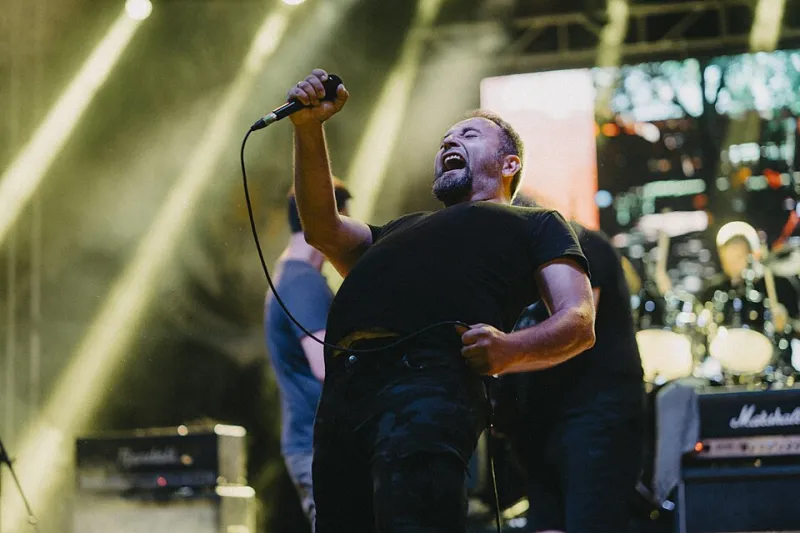
Photo: Shixart1985, CC BY 2.0, via Wikimedia Commons
You hand over $40 at the gate, grab a wristband, and walk into a field full of music, food, and string lights. Somewhere in the back of your mind, a question flickers: where does all this money go?
We got our hands on a realistic budget for a hypothetical one-day community festival — 5,000 attendees, a regional headliner, food trucks, the works. What follows is an honest look at the money, because whether you're a curious ticket-buyer or an organizer about to sign your first vendor contract, you should know exactly how thin this tightrope really is.
The Revenue Side: It's Never Just Tickets
For a 5,000-person event at $40 a head, ticket sales bring in roughly $200,000. Sounds like a pile of money, right? Here's the thing: tickets are rarely the whole picture, and they're never the profit center people imagine.
A typical mid-sized festival layers in:
- Ticket sales: ~$200,000 (and early-bird discounts shave that down)
- Booth and vendor fees: 40 food and merch vendors at $300–$600 each adds $15,000–$25,000
- Sponsorships: local banks, breweries, and car dealerships, often $10,000–$40,000 — but frequently paid in kind (free seltzer, anyone?)
Add it up and you're looking at maybe $240,000–$260,000 of total value, with a chunk of that arriving as product instead of cash. Keep that in mind, because the expenses don't accept payment in seltzer.
Where the Money Leaks Out
Now the fun part. Here's a realistic expense breakdown:
Entertainment: $60,000–$90,000. The headliner alone can eat $25,000–$50,000, plus two or three supporting acts, backline rentals, and sound and lighting crews. This is the single biggest line item, and it's non-negotiable — nobody buys a ticket for an empty stage.
Site and infrastructure: $40,000–$55,000. Porta-potties (plan one unit per 75–100 attendees, so 50–65 units at ~$150 each), staging, fencing, generators, trash service, and tent rentals. This category is where first-time organizers get ambushed. Everything costs triple what the internet told you.
Insurance and permits: $8,000–$15,000. General liability, liquor liability if you're pouring, fire permits, health department inspections, and often an off-duty police detail required by the city. Unglamorous, unavoidable.
Security and medical: $10,000–$18,000. Guards, EMTs, and the aforementioned police presence. Insurers and venues require it; your budget requires it.
Marketing, staffing, and miscellany: $25,000–$40,000. Social ads, posters, porta-staging of signage, radios, portable WiFi, volunteer T-shirts, water, and the emergency fund every veteran organizer swears by (because something will break).
Running the Numbers
Add the middle of those ranges and you land around $190,000–$210,000 in hard costs against roughly $220,000 in actual cash revenue. Net? Somewhere between break-even and a $20,000–$30,000 surplus — on a good year.
Now stack up the bad scenarios. Rain cuts attendance 30% (costs barely budge). The headliner's flight cancels. A generator dies at 4 p.m. One rough event can wipe out two profitable ones, which is why so many festivals are labors of love run by nonprofits and civic groups rather than money machines.
Who's Actually Making Money
Here's the twist: the festival often isn't the one cashing in. Quietly, consistently, these parties profit:
- Food vendors. A well-run booth at a sold-out 5,000-person event can clear $3,000–$8,000 in a day. Multiply across a summer circuit, and festival vending is a genuinely good business.
- Rental companies. Every festival needs the same fences, toilets, and stages. The rental outfits serve dozens of events a season.
- Hotels and rideshare drivers. Out-of-town attendees book rooms and rides, pumping money into the local economy without a dollar passing through the festival's books.
- The town itself. Restaurant and shop owners near the venue report their best Saturdays of the year.
What This Means for You
If you're an attendee: that $40 ticket is not making anyone rich. It's buying about 40% of a stage, half a porta-potty, and a sliver of insurance paperwork — with a community group crossing its fingers about the weather.
If you're an organizer: budget for the bad year, get three quotes for everything, read the force majeure clause twice, and never — never — let entertainment costs exceed 40% of projected revenue.
Festivals look effortless from the lawn. Up close, they're a high-wire act performed over a spreadsheet. The next time you're dancing in that field, tip your hat to the folks balancing the books — and maybe buy a second taco. Somebody's gotta feed the vendors' margins.