Sold Out Before the Headliner: Inside the Frenzy of Festival Merch Drops
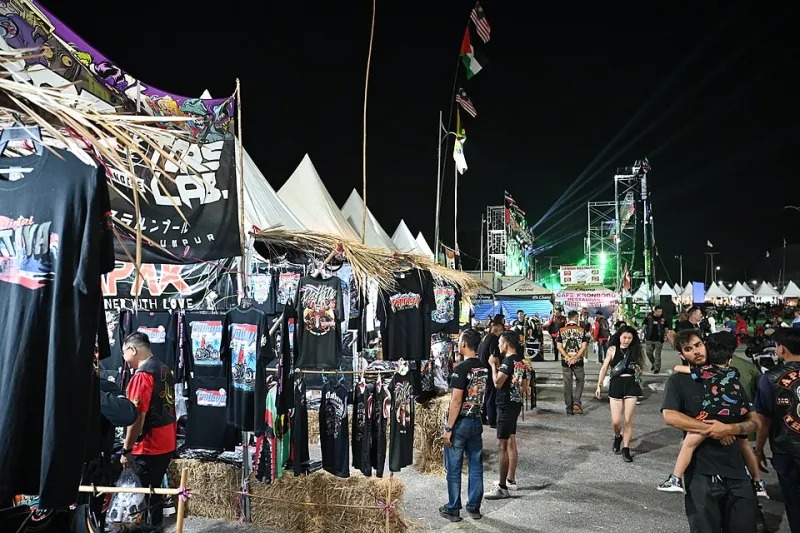
Photo: PattayaPatrol, CC BY-SA 4.0, via Wikimedia Commons
There's a moment at every big festival now that would've seemed absurd a decade ago: gates open at noon, the headliner doesn't play until 10 p.m., and by 2 p.m. there's a line snaking past the ferris wheel — not for food, not for the front row, but for a t-shirt.
If you've been to Coachella, Lollapalooza, or honestly any mid-size regional fest in the last few years, you've seen it. The merch tent used to be a sad folding table near the exit. Today it's often the best-designed retail space on the grounds, staffed like a boutique, restocked like a sneaker store, and patrolled by resellers with phones full of listings.
So what happened?
From Souvenir to Statement
For most of the last century, event merch was a souvenir. You bought the shirt because you went to the thing, and the shirt proved it. The design was usually an afterthought — logo, date, maybe a stock photo of a guitar.
That logic flipped somewhere in the mid-2010s, and it flipped for the same reason everything in fashion flips: scarcity plus taste. Streetwear brands like Supreme trained an entire generation to treat clothing releases like events. Limited drops. Timed releases. The thrill of the miss. Festival organizers, watching kids camp out for sneakers at 5 a.m., had a lightbulb moment — they were already running events. Why not run drops?
The result is what one longtime vendor at a Midwest bluegrass festival described to me as "the merch arms race." Her booth, which once cleared maybe $3,000 a weekend, now does numbers she declined to share but described as "the difference between me having a side hustle and me having a business."
What Actually Sells Out
Here's what surprised me most when talking to vendors: it's almost never the headline act's shirt that goes first.
"People assume the headliner tee is the money," says a merch manager who's worked fests from Bonnaroo to smaller regional events. "It's not. It's the weird one. The inside-joke design. The one that only makes sense if you were there."
The psychology tracks. A band tee says "I like this band" — and you can buy that at any show on the tour. A festival tee with an inside joke, a specific year, a design only pressed 200 times, says "I was in the field when it rained sideways and we all sang the wrong lyrics together." That's not merch. That's membership.
Organizers have caught on. The playbook now looks like this:
- Drop early, drop small. Limited quantities of the flagship design go live when gates open. Scarcity does the marketing.
- Collab up. Partnering with a local screen printer, a regional artist, or a small streetwear label gives the merch credibility a logo can't buy.
- Hide something. Undisclosed designs, mystery colorways, items that only appear on day two. FOMO is the engine; the merch is just the vehicle.
- Make it wearable at home. The best festival merch doesn't scream "I went to a festival." It's a shirt someone in Cleveland would wear to brunch. That's the whole trick.
The Resale Shadow Market
Of course, the moment anything becomes scarce, a second economy blooms in the parking lot.
Browse any resale app the Monday after a major festival and you'll find tees that sold for $45 listed at $150, sometimes higher for collabs with recognizable artists. Some organizers hate this; a few have quietly embraced it, reasoning that resale buzz is free marketing for next year's drop.
Vendors have mixed feelings too. One screen printer I spoke with put it bluntly: "On one hand, someone's making triple off my work and I see none of it. On the other hand, when my stuff resells, next year's booth has a line around the block. It's complicated."
What Attendees Should Know Before They Buy
If you're heading to a fest this season and planning to grab merch, a little strategy goes a long way:
Go early or go home. The good stuff genuinely does sell out — often before sunset on day one. If there's a design you love, buy it when you see it. "I'll come back later" is the most expensive sentence in festival merch.
Check the fabric, not just the print. With designer collabs, quality varies wildly. A $60 tee on blank cotton that feels like sandpaper is still sandpaper.
Beware the parking lot. Counterfeit fest merch is a real and growing problem, especially at the big events. If a deal seems too good outside the gates, it usually is.
Buy what you'd wear anyway. The tee that lives in your rotation for three years is worth it. The one that lives in a drawer is just a $50 receipt.
The Bigger Picture
There's a larger story here about how live events pay their bills. Ticket prices are under constant scrutiny, sponsorships fluctuate, and margins on beer are what they are. Merch has become one of the few revenue streams where attendees feel good about opening their wallets — because they're getting something back, something wearable, something that keeps the party going long after the amps are packed up.
And maybe that's the real reason festival merch exploded. A ticket stub fades. A phone video gets watched twice. But a great shirt? You wear it to the grocery store, to a friend's BBQ, to the next festival — and every time, somebody asks, "Where'd you get that?"
Which, as any organizer will tell you, is the best marketing money can't buy.