When the Rest of America Sleeps, the 3 A.M. Fiesta Just Gets Started
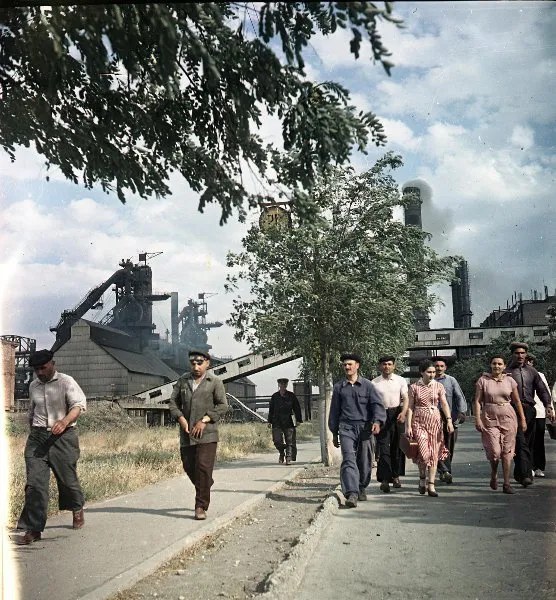
Photo: Vsevold Tarasyevich, CC BY-SA 4.0, via Wikimedia Commons
At 2:47 a.m. in a break room outside Columbus, Ohio, a warehouse crew is singing happy birthday. There's a sheet cake from the grocery store, a crockpot of tamales someone's aunt made, and string lights someone zip-tied to the shelving units because, honestly, why not? Nobody here is tired. They've been awake for hours. This is their evening.
We talk a lot about nightlife in America — the bars, the concerts, the rooftop parties — but almost all of it is built around one assumption: that you work days. Meanwhile, roughly 15 million Americans punch in while the rest of us punch out. And somewhere along the way, they stopped waiting for weekends to celebrate. They built their own fiesta calendar, and it runs on a completely different clock.
The Sunrise Fiesta Is a Real Thing
Ask around in any hospital, plant, or distribution center and you'll hear versions of the same traditions. There's the "halfway party" — celebrated at the literal midpoint of a shift, around 3 a.m. for a 7-to-7 crew. There's the sunrise tailgate, where overnight workers clock out at 6 or 7 a.m., meet in a parking lot with grills and folding chairs, and toast the end of their "day" with breakfast burritos and cold drinks as everyone else is scraping frost off windshields.
A night-shift ER nurse in Phoenix told us her unit does a monthly "sunset breakfast" — potluck dishes dropped off at the start of the shift, eaten together as the sun comes up on the hospital patio. "People bring their kids sometimes before school," she said. "Their kids think it's hilarious that mom's going to a party at 7 a.m. Technically, it's my going-home time."
That inversion — morning as happy hour, midnight as mid-afternoon — is the whole cultural logic of night-shift celebration. Once you stop seeing 3 a.m. as an off-limits hour and start seeing it as prime social time, an entire scene opens up.
Organizers Are Finally Catching On
For years, community event planning ignored this crowd entirely. Farmers markets closed by dinnertime. Festivals wrapped by 10 p.m. If your shift started at 11 p.m., you were structurally excluded from civic life.
That's changing. Some libraries and rec departments now run "late shift socials" — coffee-and-tacos gatherings at 10 p.m. A few cities have experimented with overnight street fairs timed to hospital and logistics corridors. And churches, which have always had a knack for feeding people at odd hours, increasingly host post-shift pancake breakfasts that double as community mixers.
The smart organizers have figured out the golden rule: don't schedule around the clock, schedule around the shift. A party that starts at 8 a.m. after a 7 a.m. shift-change? Perfect. That's Friday night for somebody.
Why It Matters
There's a real argument here beyond fun. Night workers report higher rates of isolation — their schedules are out of sync with family, friends, and pretty much every social institution. Shared celebration is one of the cheapest, most effective antidotes we have. A crockpot in a break room doesn't fix sleep science, but it does something: it says this hour counts too.
And honestly, there's something the day-shift world could learn from these celebrations. Night-shift parties tend to be scrappy, sincere, and weirdly democratic — the forklift operator and the floor supervisor splitting a gas-station pie at 4 a.m. No velvet ropes. No cover charge. Just people marking time together, wherever that time happens to fall.
So the next time you're out at 2 a.m. and see a parking lot full of lawn chairs and a grill going near a hospital or a warehouse — that's not an anomaly. That's a fiesta you just didn't know about. The night shift was never missing the party. They just moved it.
Every night becomes a celebration — even, and maybe especially, the ones most of us sleep through.