Year One Is a Party. Year Ten Is a Tradition: What Keeps Community Festivals Alive
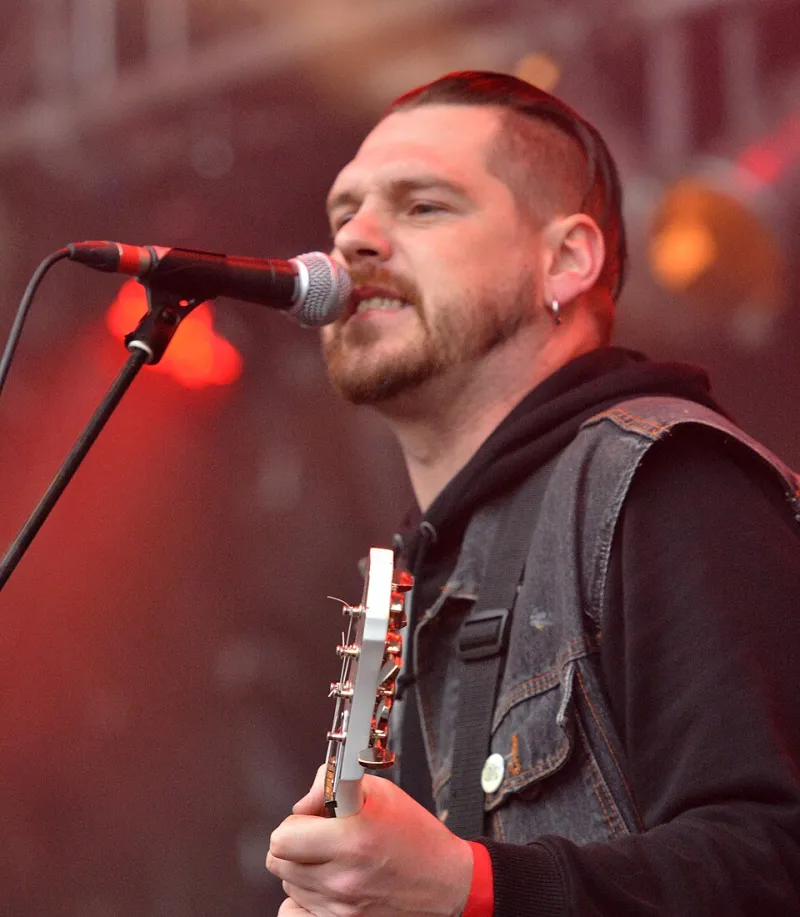
Photo: Frank Schwichtenberg, CC BY-SA 3.0, via Wikimedia Commons
Every summer, somewhere in America, a festival dies. Not with a headline — usually with a quietly cancelled press release, a Facebook page that stops posting in July, and a committee that stops returning emails. Meanwhile, a few towns over, a harvest celebration just marked its 87th consecutive year, and the parade route smells the same as it did in 1962.
What separates the festivals that become institutions from the ones that become cautionary tales? We spent weeks talking to organizers, past and present, and the answer isn't luck. It's architecture.
The Three-Year Cliff Is Real
Ask anyone who's organized community events and they'll nod knowingly at the phrase "the three-year cliff." Year one runs on novelty and adrenaline — everyone shows up because everything is new. Year two runs on momentum. Year three is where the novelty is gone, the founding volunteers are exhausted, and the town shrugs: we've seen it.
That's when the cancellations start. And once a festival skips a year, coming back is brutal. Communities have long memories for broken promises, even small ones.
The festivals that survive the cliff, it turns out, planned for it from the beginning.
Rule One: Nobody Owns the Party
The single biggest predictor of a festival's lifespan? Whether it's attached to a person or attached to an institution.
The events that last a century almost always belong to something bigger than their founder — a Lions Club, a chamber of commerce, a fire department auxiliary, a church picnic that got too big for the churchyard. When the founder of the Strawberry Festival in her small Midwestern town moved to Florida, the Elks Lodge simply kept going. Nobody had to be talked into it. The festival was the lodge's job, not her passion project.
Contrast that with the countless one-person shows: the tireless local who books the bands, runs the vendor applications, and answers the festival email at midnight. That works — until they burn out, move away, or get sick. Passion is a terrible succession plan.
Rule Two: The Calendar Is a Strategy Decision
Here's an unglamorous truth that kills more festivals than any budget shortfall: bad dates.
New organizers often pick their weekend by gut feeling. Veterans pick by triangulation. You want a weekend with no competing event within an hour's drive, decent weather odds (check the ten-year historical average, not last year), and — crucially — a natural anchor. Apple festivals happen when apples are ripe. River festivals happen when the water's warm. The calendar itself becomes a reason the festival exists, which means it can't be casually moved or forgotten.
The small-town bashes that punch above their weight almost always own a weekend. The town knows: third Saturday in October, that's the festival. When it's on the mental calendar, attendance becomes a habit, and habits are what outlive hype.
Rule Three: Volunteers Need a Ceiling
Volunteer burnout is the quiet serial killer of community events. The fix isn't recruiting harder — it's designing roles that don't consume people.
Look at how enduring festivals structure their work: short shifts, capped commitments, and a hard rule that no one holds more than one major role. The chairman of a 60-year-old corn festival told us his committee's golden rule: "If you're doing two jobs, we've failed, not you." Every role has a named deputy, every year, so knowledge transfers continuously instead of living in one person's head.
Short-lived festivals tend to run on heroics. Long-lived ones run on boring, redundant systems.
Rule Four: Give the Festival a Job
The festivals that last tend to do something. They fund the scholarship fund. They restore the town clock. They keep the fireworks show alive. A festival with a civic mission has a constituency beyond people who like funnel cakes — and when money gets tight, the mission gives the town a reason to fight for it.
That doesn't mean every event needs a nonprofit arm. It means the celebration should be woven into civic identity, not floating above it. The parade that ends at the firehouse fundraiser. The pie contest judged by the mayor. The proceeds that visibly improve something locals walk past every day.
A Roadmap for Would-Be Traditions
If you're dreaming up a festival right now, here's the distilled advice from people who've kept theirs alive for decades:
- Institutionalize early. Get a nonprofit, a civic club, or a chamber behind it before year two.
- Pick a date you can defend — anchored to season, harvest, or geography.
- Start smaller than your ambition. A modest event that goes smoothly builds more goodwill than an ambitious one that melts down.
- Document everything. Contacts, budgets, vendor lists, what went wrong. Institutional memory is oxygen.
- Recruit your successor in year one. Not year five. Year one.
A festival's first year is a party. Its tenth year is a tradition. The difference isn't the bands, the food trucks, or even the weather. It's whether the community — not one person — decided this thing belongs to them.
Every night can be a celebration. But the celebrations worth remembering? Those take a decade of boring, brilliant planning.