Dottie's List: The Spreadsheet That Decides Who Gets Invited to the Party

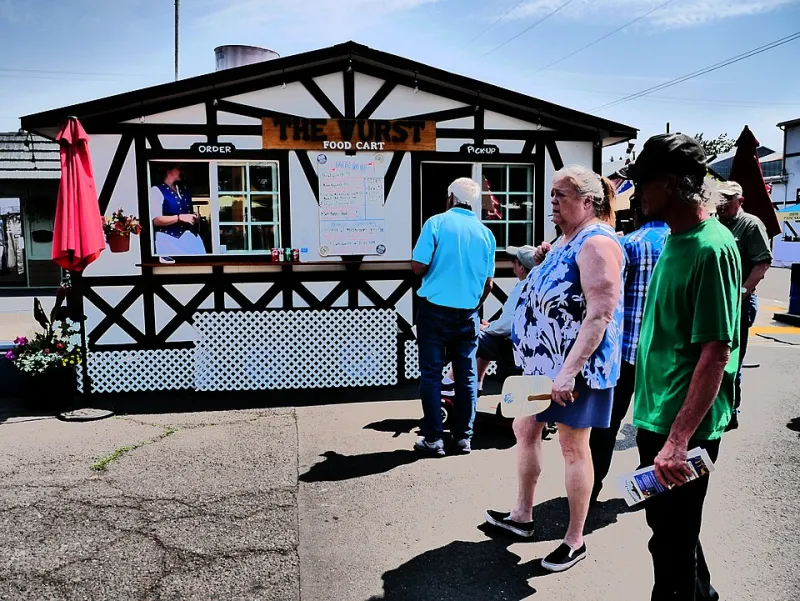
Photo: Shixart1985, CC BY 2.0, via Wikimedia Commons
Every town has an official version of its biggest party. Posters, press releases, a website with a countdown clock. But in plenty of American towns, the real event distribution system runs on something far less glamorous: a phone tree, a church bulletin, a group chat with a name like "Fall Fest Core Crew (NO FORWARDING)."
And in some towns, it runs on one person.
In my corner of the Midwest, that person is Dottie.
The Spreadsheet Nobody Asked For
Dottie is 71, retired from the county assessor's office, and the keeper of what she calls "the list." It's a Google Sheet — her nephew set it up in 2019 — with 14 tabs, color-coded by relationship category: family, church, bowling league, former neighbors, "people who helped with the flood." Every year, the town's harvest festival committee quietly sends her the ticket link a full week before the public on-sale.
By the time tickets hit the general public, Dottie's list has already claimed roughly 60% of the VIP passes and a healthy chunk of the good table seats.
"I don't sell anything," she told me, genuinely baffled that anyone would think otherwise. "I just know who would be sad if they missed it."
That's the whole business model. Dottie is in the business of preventing sadness, and the festival committee has learned that a happy Dottie network means a smoother gate, fewer disputes, and a crowd that already feels like it belongs.
How the Informal Economy Actually Works
Spend enough time around community festivals and you start to see the pattern everywhere. The formal ticketing system is the visible layer. Underneath it sits a web of pre-existing social infrastructure that's decades old:
- Phone trees. Yes, actual phone trees. The same ones churches used for snow cancellations now move festival presale links in about ninety minutes flat.
- Bulletins and newsletters. The parish bulletin announcement is a soft launch. If you know, you know.
- Group chats with tiers. There's the inner chat, the outer chat, and the chat someone's cousin added you to where the link has already expired.
- The booth network. People who volunteer, sponsor, or run food stands get their invites through work, not through Ticketmaster.
None of this is corrupt, exactly. It's just how trust has always moved in small communities — through people, not platforms. The festival doesn't advertise a presale to Dottie's network. It simply lets Dottie know, the way you'd let a neighbor know the driveway needs clearing before the plow comes.
What Happens When Newcomers Try to Buy In
Here's where it gets interesting — and a little uncomfortable.
Three years ago, a developer moved to town, bought one of the big houses on the hill, and decided the way into local society was money. He offered to "sponsor" his way onto the reserved tables. He emailed the committee. He emailed the committee's boss. He tried, I'm told, to buy Dottie's nephew's company's worth of tickets in one transaction.
It didn't work. Not because the committee is adversarial — they'd have happily taken sponsorship money. But the social layer doesn't respond to transactions. It responds to participation. The developer showed up to zero planning meetings, volunteered for zero shifts, and knew nobody's kid's name.
Meanwhile, a young couple who moved to town the same year got on Dottie's list within eight months. Their crime? They showed up. They helped stack chairs after the fish fry. They asked what was needed.
"The list isn't a VIP club," Dottie insists. "It's a memory. I just remember who shows up."
Is This Fair? Honestly, Sort Of
There's a real critique here. Informal networks can ossify. They can exclude newcomers, renters, people who don't attend the right church or bowl in the right league. Every town has someone who feels permanently outside the list, and that sting is real.
But there's also something the algorithm-driven ticketing world could learn from Dottie. Her system distributes access based on contribution and relationship, not on who has the fastest thumb at 10:00 a.m. on a Tuesday or a bot running in a server farm. The scalpers have never cracked Dottie's list, because you can't scrape a phone tree.
The towns that do this best are the ones quietly building on-ramps — newcomer mixers, volunteer sign-ups that feed the list, committees that make a point of adding fresh names every year. The list survives by breathing in new people.
The Takeaway for Your Next Fiesta
If you're throwing a party — a block party, a festival, a backyard blowout — remember that your guest list is never really a list. It's a living thing made of every favor, every chair stacked, every name remembered. The promoters sell the tickets. But people like Dottie decide who feels like they were meant to be there all along.
And that, more than any headliner, is why every night becomes a celebration.