The Eight-Hour Drive, the Five-Minute Chat, and the Math That Keeps Festival Vendors Alive
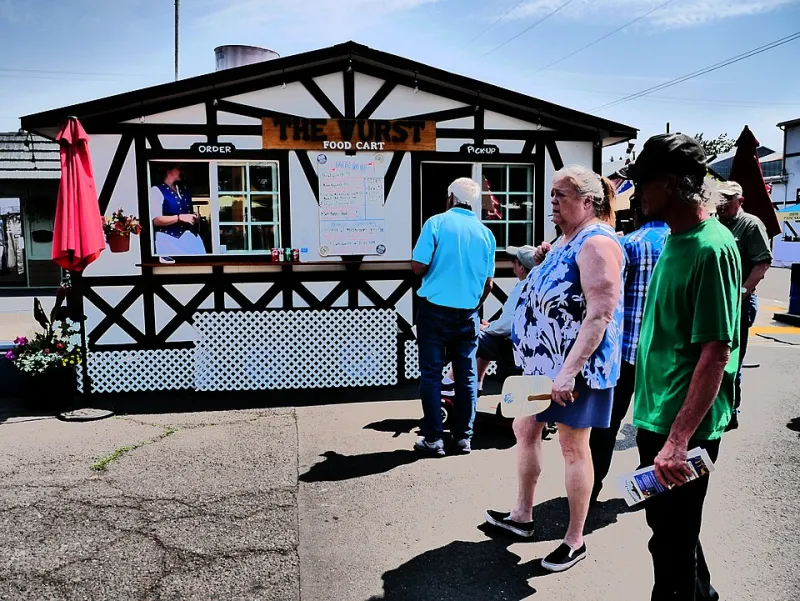
Photo: Rick Obst, CC BY 2.0, via Wikimedia Commons
Every festival has a moment when the gates open and the crowd pours in — and every vendor behind those booths knows the real work started days ago, somewhere on a highway, in a van packed to the ceiling with folding tables and hope.
We spent a season talking to the people who make the midway hum: the lemonade couple scaling up from one cooler to four, the hand-poured candle duo who met in a community college chemistry class, the third-generation funnel cake family whose grandma still works the batter on Saturdays. What we found wasn't just hustle. It was a whole traveling economy that most of us walk right past on the way to the stage.
The Drive Is the Down Payment
Ask any vendor about their weekend and they'll start with mileage, not menus. Ray and Marisol, the candle duo out of Chattanooga, once drove eight hours to a riverfront fiesta in Illinois for what they describe as "one five-minute conversation with a festival director that decided our whole year." That chat got them a corner booth. The corner booth got them a repeat customer base. The repeat customers got them through a season when two other events rained out entirely.
That's the deal on the circuit: you gamble hours, gas money, and booth fees — anywhere from $75 at a small-town harvest fest to $1,200 for a big city weekend — on the promise of foot traffic nobody can guarantee. When it works, it really works. When it doesn't, you're eating your own inventory at a rest stop in Indiana.
Cash-Flow Math at 6 A.M.
There's a quiet ritual that happens in the parking lot before gates open. Vendors call it "doing the numbers," and it goes something like this: booth fee, fuel, propane, product cost, and the big one — how many $12 sales until we're even?
For the lemonade couple, it's around 90 cups. For the funnel cake dynasty, it's closer to 60 plates before a single dollar is profit. Every early-morning setup, every weather radar refresh, every "should we do the second weekend or not" debate runs through that math.
And yet the canopies go up anyway. Slightly battered, sun-faded, patched with duct tape from three seasons ago. Nobody's in this for the canopy.
What Success Actually Looks Like
Here's the part that surprised us: almost nobody measured a good weekend in revenue alone.
The funnel cake patriarch — third generation, apron older than most of the crowd — said his best event ever was the year he taught a teenager how to flip batter because the kid "kept asking real questions." The candle duo keeps a notebook of customers who come back year after year, tracked by first name and hometown. One family has bought the same cedar-and-clove candle at four different festivals across two states.
That's not a transaction. That's a following. And on the festival circuit, a following is the only currency that compounds.
Why This Economy Deserves Your Attention
America's festival weekends quietly employ thousands of people who will never trend on a streaming chart or get a storefront on Main Street. They're the mobile backbone of every community celebration from county fairs to city-wide fiestas — the reason the air smells like fried dough and the walkways glow with someone's handmade craft.
So the next time you're at an event, do the five-minute thing: stop at a booth, ask a question, learn a name. It costs you less than a lemonade. For the person behind the table, it might be the whole reason they drove eight hours.
The party doesn't happen without them. The least we can do is notice.