The Tamale Wars: Inside the Cook-Off Tents Where Family Legends Are Made
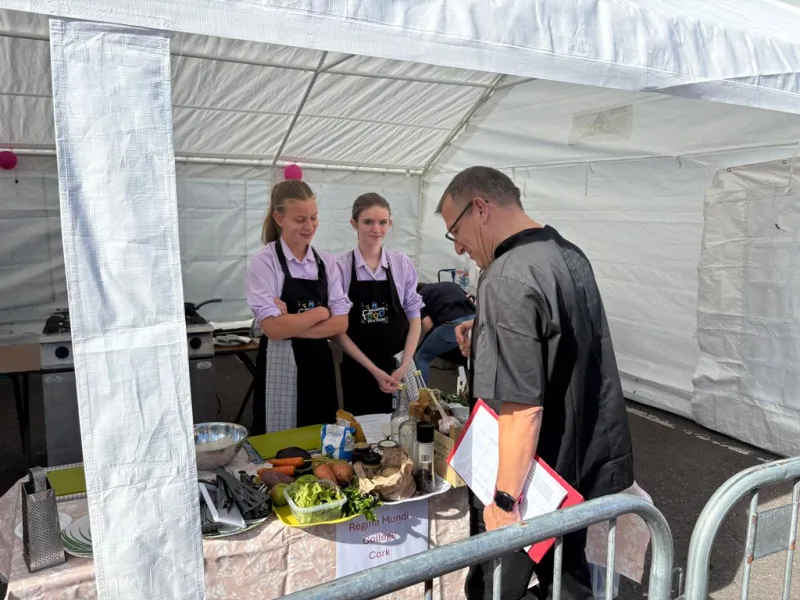
Photo: festival cook-off competition judges tasting food white tent, via www.reginamundicork.ie
Every festival has its main stage. But ask anyone who's actually been to a serious fiesta — the kind that shuts down three blocks of a Texas town or takes over a New Mexico fairground — and they'll tell you the real show happens under a white tent with a folding table, a stack of numbered cups, and three people holding spoons like gavels.
Cook-offs are the quiet heartbeat of America's festival circuit. And make no mistake: they are not casual affairs.
The Tent Where Grudges Go to Die (and Get Reborn)
At the annual tamale competition in San Antonio — one of dozens that bloom across Texas every fall — the line of entrants starts forming before the judges' table is even set up. There's a woman who has won four years running. There's her cousin, who entered specifically to beat her. Neither will make eye contact until the results are read.
"This is how our family communicates," one third-generation competitor told me, ladling her abuela's red pork recipe into sample cups. "We don't argue at Thanksgiving. We argue here, with masa."
That's the thing about festival cook-offs that outsiders miss. The competition is real — trophies are polished, recipes are guarded like state secrets, and yes, someone once reportedly swapped a rival's chili powder — but the rivalry is a love language. It's how families stay glued together across generations.
Chili, Brisket, and the Sacred Numbered Cup
Head two states west and the battlefield changes. New Mexico's chili throwdowns run on a simple, brutal format: anonymous entries, numbered cups, blind judging. No names. No reputations. Just flavor.
The judges take it seriously. One veteran judge in Las Cruces described his palate-cleansing routine between entries — crackers, water, a moment of silence — with the gravity of a sommelier. "You owe every cook your full attention," he said. "Somebody's grandmother is in this cup."
That's the unwritten rule of the whole circuit: you're never just tasting food. You're tasting a lineage. A recipe that survived a border crossing, a Depression, a divorce, a move to a new city. When a judge bites into a tamale and pauses, they're not just evaluating texture. They're deciding whether ninety years of family history holds up.
The Rookie Who Shook the Table
Not every entrant is a dynasty. At one autumn fiesta, a first-time competitor — a 26-year-old who learned to cook from YouTube and his grandmother's occasional phone calls — placed second against a team that had competed since the 1980s.
"I panicked and added pickled jalapeño to the filling," he admitted. "Total accident. It worked."
The old guard was gracious, mostly. There were murmurs. One champion reportedly asked whether "innovation" was really the spirit of the event. But by the awards ceremony, the kid had three phone numbers in his pocket from cooks offering to mentor him — which, on the festival circuit, is roughly equivalent to being knighted.
Why the Cook-Off Outlives Every Trend
Festivals have chased every trend imaginable: silent discos, Instagram murals, craft cocktail gardens. The cook-off tent needs none of it. Its format hasn't changed in decades because it can't be improved on — a table, a crowd, a prize, and pride.
In an era when so much of our food culture lives on screens, the cook-off is stubbornly analog. You can't taste a photo. You can't argue with a numbered cup. And you can't fake a recipe that took three generations to get right.
So the next time you're at a fiesta and you spot that plain white tent near the edge of the grounds, skip the ride line and wander over. Watch the judges circle. Listen for the gasp when the winner is announced.
That's not just a contest. That's a community deciding, one bite at a time, what it wants to remember.